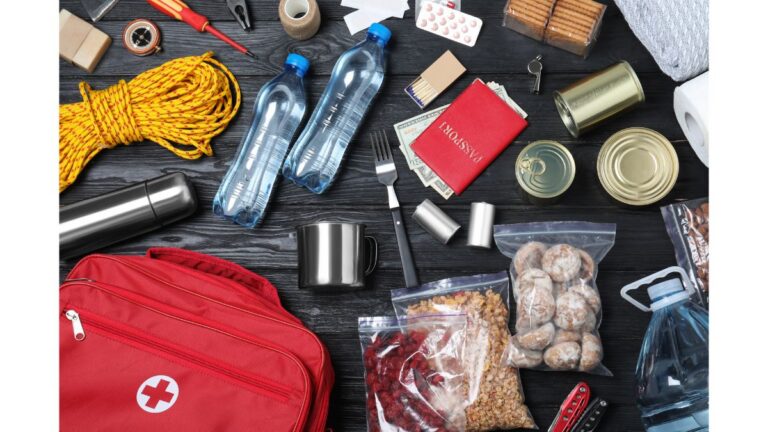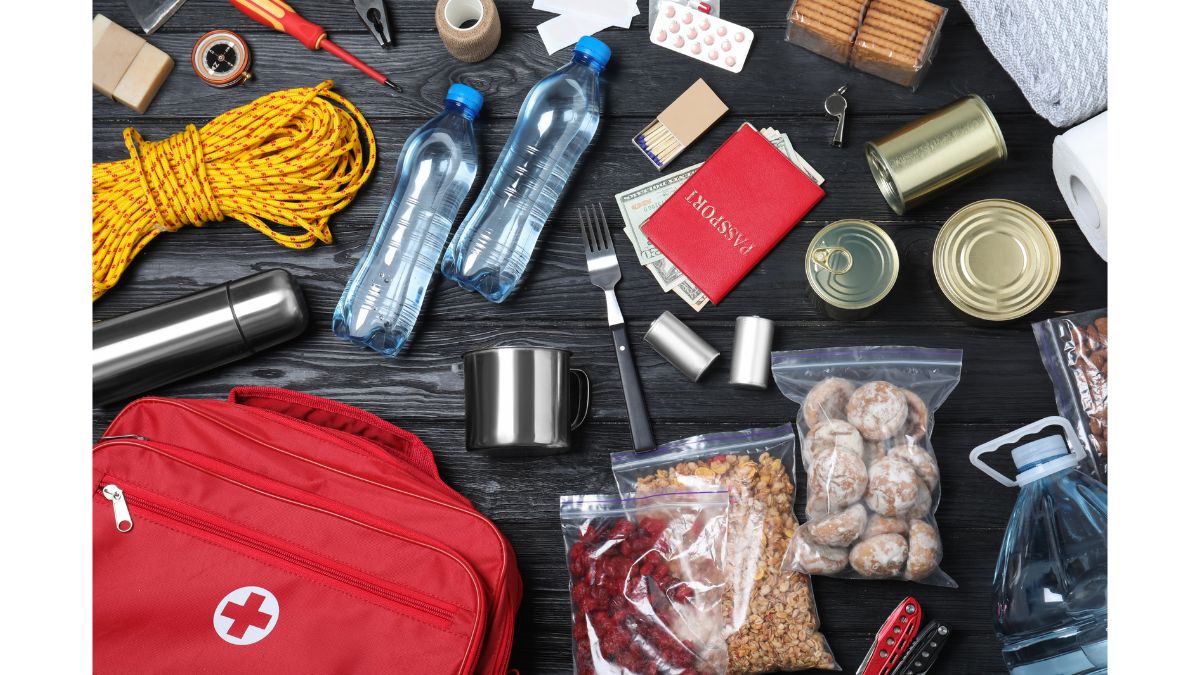
Several countries worldwide encourage residents to keep emergency supplies such as drinking water, non-perishable food, medicine and batteries on hand. The recommendations vary from country to country, but the aim is the same: to help households to manage on their own for a limited time should an emergency situation require it.
A map published on 28 October by Newsweek identified 33 countries where governments or authorities point out the importance of emergency preparedness to residents. The countries on the list include the United Kingdom, Ireland, France, Germany, the Netherlands, Denmark, Norway, Sweden, Finland, Estonia, Latvia, Lithuania, Poland, the Czech Republic, Austria, Switzerland and Croatia.
In North America, the United States, Canada and Mexico are mentioned, while Chile, Colombia, Argentina and Brazil appear in South America. South Africa is the only African country on the list. Japan, Taiwan, Israel, India, the Philippines and Singapore are named in Asia, with Australia and New Zealand in Oceania.
This does not necessarily mean that governments foresee an immediate disaster or war. Emergency preparedness is rather a preventive measure aimed at making people less vulnerable during unexpected events.
Many of the guidelines also already exist for some time and are not all new warnings. The recommendations relate to various possible disruptions, including extreme weather conditions, flooding, wildfires, earthquakes, armed conflict and cyber-attacks. Such events can disrupt electricity and water supply, communications networks, transport and the delivery of essential products. When roads are inaccessible or shops and payment systems do not function normally, basic supplies at home can make an important difference.
The period for which residents are advised to keep supplies varies. In several countries, 72 hours, or three days, is the general guideline. Sweden and Norway recommend approximately one week of emergency supplies, while Germany's guidelines make provision for up to ten days. The European Union already presented its Preparedness Union Strategy in March 2025, which aims, among other things, to help residents of member states to be able to function independently for at least 72 hours during a crisis.
In South Africa, the City of Cape Town, for example, advises that households should have enough supplies for at least three days. This includes five litres of water per person per day, food that does not need to be refrigerated, a torch, batteries, a first aid kit and essential medicine. These are local municipal guidelines and not a general national directive.
The message is thus not one of panic or bulk buying, but simple planning. Gradually gathering a few essential items together can help a household to manage a few difficult days should ordinary services temporarily be unavailable.
Sources: Newsweek, European Commission, City of Cape Town, France, Canada
This article is an automatic English translation of a Nuusflits article originally published in Afrikaans. Read the Afrikaans original.