A short email from your boss lands in your inbox: "Please come to my office right away." Your heart starts beating faster. You wonder what you did wrong. But at his office, there is thanks waiting for you, rather than a dressing down.
Hennie Terblanche uses this everyday example to explain how old experiences can influence our reactions. For someone who associated the headmaster's office with difficulty, an innocent request can still cause discomfort years later.
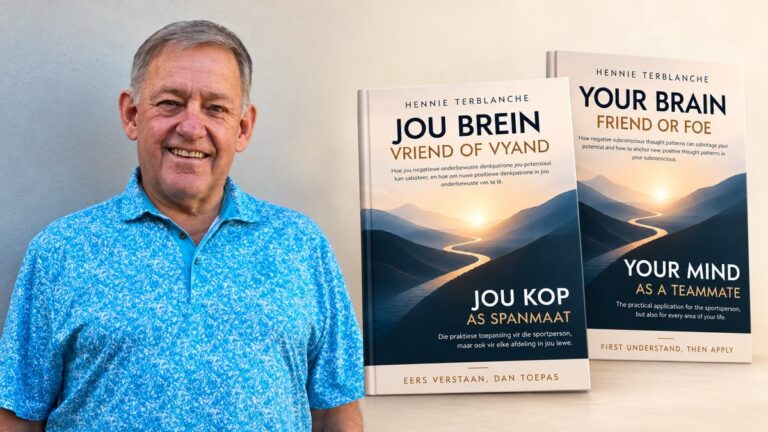
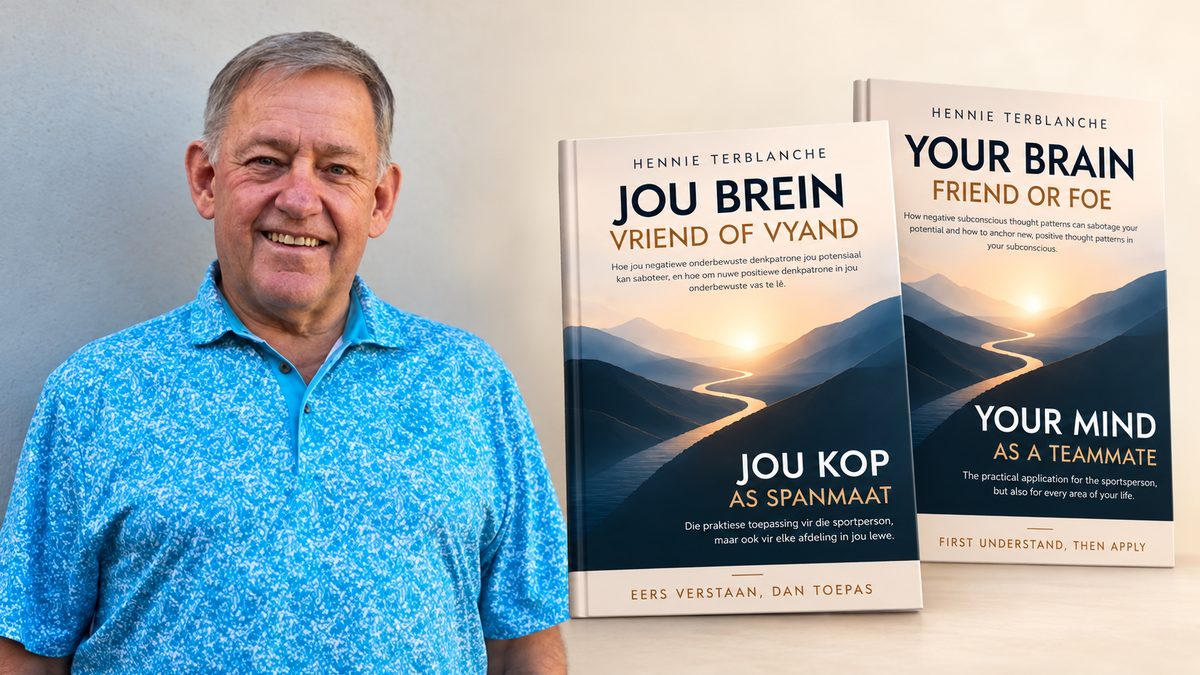
This is the kind of thought pattern he explores in his new book, Your Brain: Friend or Foe. The book will be available in Afrikaans and English and also contains the section Your Head as a Teammate. in which he applies the principles to sport.
"I have seen over the years how people want to change, but keep falling back into the same patterns," says Terblanche. "I wanted to share the principles that changed my own life, simply and practically. People are tired and stressed, and they deserve tools that really work."
Terblanche has been involved in counselling, sport and life coaching for more than thirty years. He lives in George, enjoys playing golf and offers workshops for companies and communities. His regular messages about thinking, gratitude and personal growth are already part of many people's mornings.
The personal story behind Hennie Terblanche's book
The book also has a personal origin, however. He tells how he began to reflect later in his life on how his home environment, school, religion, culture and politics shaped his thinking.
When he had questions, he initially sought answers from the same people and institutions that had helped establish those beliefs. According to him, this left little room for new insights.
"Until I realised: there is more. I didn't renounce my faith, but I began to question, read and apply."
This process, according to him, led to greater peace, joy and emotional growth.
"We are all still on a path of growth and development every day, but it is an exciting path."
Old programmes and new thought patterns
With Your Brain: Friend or Foe . he wants to reach people seeking change, but who don't know where to begin. It is also intended for readers who feel there is potential they still want to discover and develop.
He describes the "old programmes" he writes about as established thought patterns and beliefs that can influence someone's reactions, sometimes before you consciously think about them.
While his daily messages usually touch on one thought, the book offers space to develop the ideas further and apply them practically.
"A daily message plants a thought. The book gives you the whole path: how your brain works, how to discover your own old programmes, and how to establish new programmes step by step, with true stories, research and practical exercises. Not just the 'what', but also the 'how'."
According to Terblanche, the chapters contain research references, with the sources at the end of each chapter.
Catch, stop and replace
One of the exercises he proposes, he calls "catch, stop and replace". It involves noticing a negative thought, consciously interrupting it and directing your attention towards the positive outcome you would rather pursue. He emphasises that practising new thinking habits requires repetition.
Gratitude is another ongoing theme in his work. For him, it doesn't begin by denying heartache or problems.
"First honestly acknowledge the challenge or the hurt in your life. Then start small: say thank you every morning for your bed, for water, for coffee."
He describes it as practising a life attitude: to develop appreciation for the everyday and also make space for it in difficult times.
Your Head as a Teammate
The final section of the book, Your Head as a Teammate. takes the principles to the sports field. It is part of the same book, rather than a separate publication.
Terblanche says he could have applied the principles to the business world, a career or the spiritual life, but chose sport because it is familiar to so many people. Whether you participate yourself or support from the sidelines, sport offers countless examples of how people handle pressure, disappointment, discipline and teamwork.
"I see sport as one of the best ways to teach children from a young age life principles such as discipline, self-respect, respect for others and teamwork, while they do something they enjoy."
This section, according to him, is intended for young players, professional athletes and people who simply practise sport for recreation.
"Your head can be your greatest opponent, or your best teammate."
He also sees the book as a gift for a friend, family member or employee interested in personal growth. The aim, he says, is for readers to understand the principles and then apply them in their own everyday lives.
When will the book appear?
The book is currently in the publishing process. A final price and publication date have not yet been confirmed, but Terblanche hopes to announce more details by mid-November 2026.
Readers can register their interest at hennieterblanche.co.za/boek to hear when the book is available.
Follow Hennie also on Instagram at @kreatiewedenke.
This article is an automatic English translation of a Nuusflits article originally published in Afrikaans. Read the Afrikaans original.