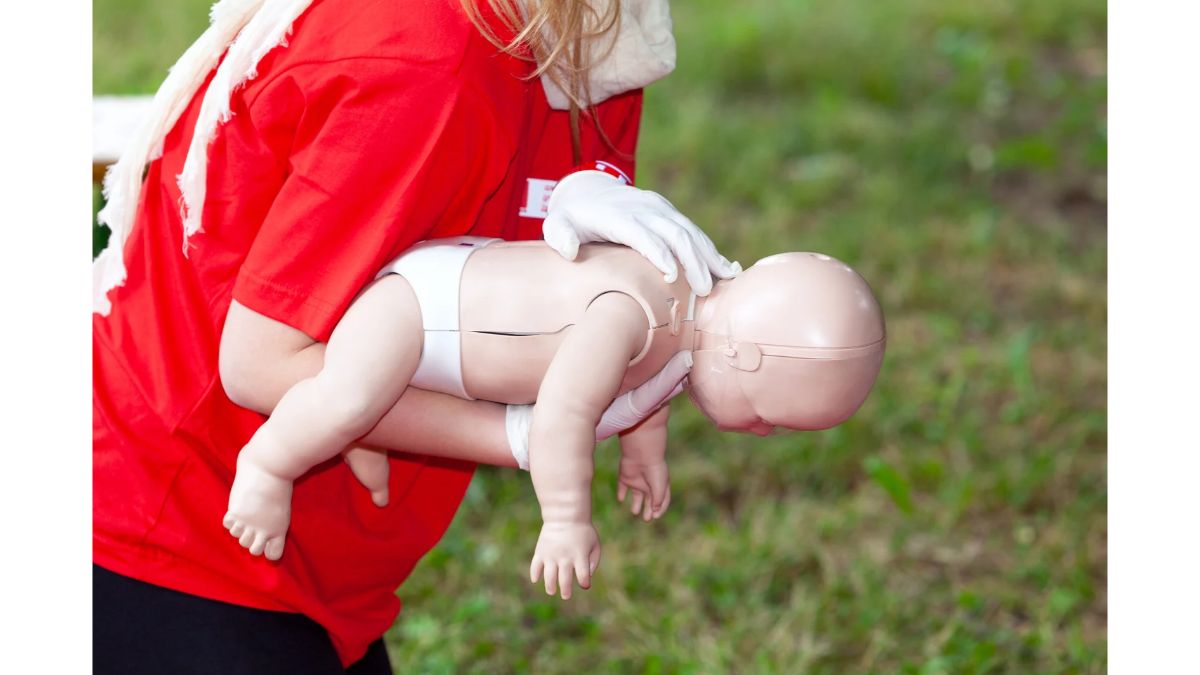
Choking hazard foods such as whole grapes, sausages, popcorn and marshmallows can block a child's airway. Babies and young children are especially vulnerable as they learn to chew and swallow. The World Health Organisation (WHO) lists whole grapes and raw carrots as examples of food that poses a choking hazard in that form. The size, shape and texture of food determine how easily a child can chew and swallow it.
Let children sit upright while eating and supervise them. Do not let them eat while walking, running or playing. The CDC and the British NHS provide specific guidance on preparing and serving food for young children.
How do you recognise an emergency?
South Africa's Department of Health guidelines distinguish between a child who can still cough effectively and a child whose airway is severely blocked. If the child can still cough hard, encourage them to keep coughing and stay with them. Get emergency help immediately if a child struggles to breathe or suddenly cannot speak, cry or cough effectively. Do not blindly search the child's mouth with your fingers for the food. Emergency procedures for babies younger than one year differ from those for older children.
What foods pose a choking hazard?
| Food | How to reduce the risk |
|---|---|
| Whole grapes, cherry tomatoes and other small, round fruits | Cut lengthwise into quarters. Remove pips where necessary. |
| Raw carrots, hard apples, whole corn kernels and whole bones | Grate hard fruits and vegetables or cook them soft. Mash cooked corn kernels and bones into a fine paste for babies. |
| Sausages such as Vienna sausages | Cut lengthwise into short, thin strips and avoid round slices. |
| Tough meat, large chunks of cheese and meat or fish with bones | Cut meat into small pieces or shred it. Grate cheese and remove all bones or fish bones. |
| Whole nuts, seeds and spoonfuls of peanut butter | Give ground nuts. Spread peanut butter thinly on bread once the child can eat bread. |
| Popcorn, crisps and hard snacks such as pretzels | Avoid these for babies and young children. |
| Gummy sweets, hard sweets, toffee, marshmallows and chewing gum | Avoid these for young children. The CDC also lists tough fruit snacks and dried fruits such as raisins as potential choking hazards. |
The table contains examples from the United States Centers for Disease Control and Prevention (CDC) list and from the British NHS. As nutritional advice, the CDC also recommends that babies and young children avoid food with added sugar or with low- or zero-calorie sweeteners.
Sources: World Health Organisation (WHO), www.cdc.gov, National Department of Health
This article is an automatic English translation of a Nuusflits article originally published in Afrikaans. Read the Afrikaans original.