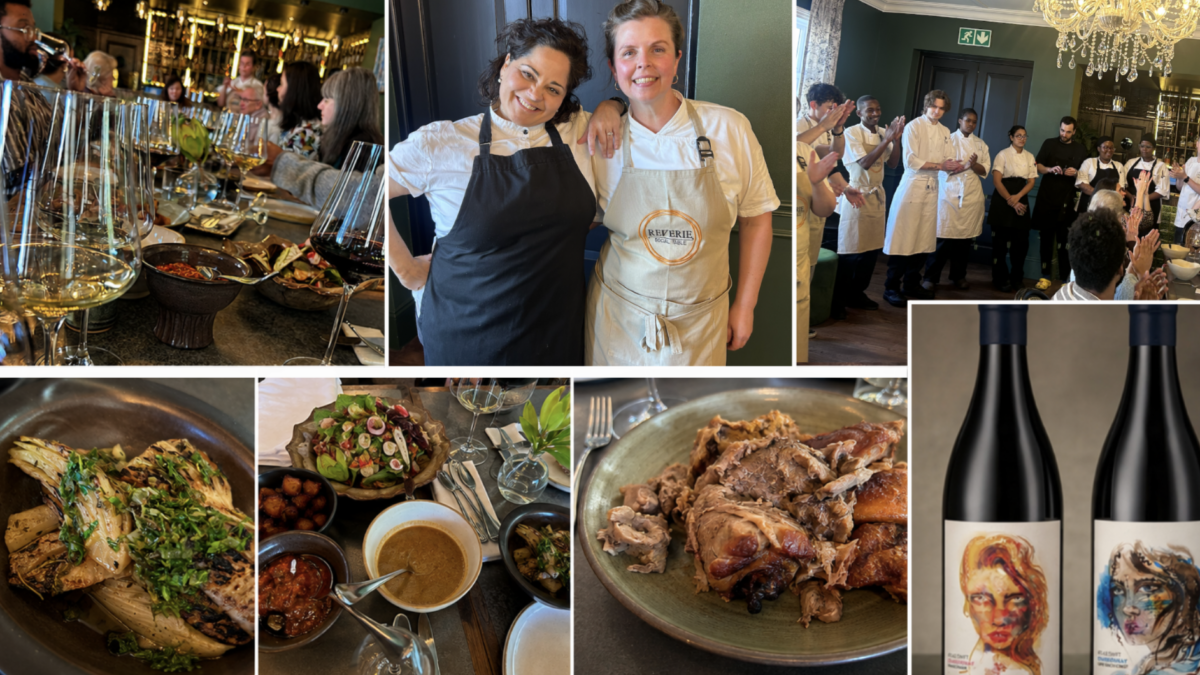
CAPE TOWN. – It began with a glass of Chardonnay and unfolded over several hours around a long table of beautifully prepared food, thoughtfully paired wines and conversations between people who did not all know one another at the start of the afternoon.
At Upper Union in Cape Town, Chef Amori Burger, Group Executive Chef of MORE Collection and Julia Hattingh, chef and owner of Reverie Social Table, brought their Women’s Month Sunday Lunch Series to a close on Sunday with an afternoon devoted to good food, good wine and the women behind both.
The series was created as a four-Sunday celebration of women in South Africa’s food and wine industry, bringing Burger and Hattingh together in the kitchen with a different female winemaker featured at each lunch. The first two Sundays were hosted at Reverie Social Table before the collaboration moved to Upper Union for the final two, with Olifantsberg Wines, Kasteelberg Wines and RAAR, McFarlane Wines and Atlas Swift represented across the month.
Each lunch was intentionally intimate, with just 16 guests seated for a seasonal three-course menu created by the two chefs and wines selected to accompany the food. The idea was not simply to mark Women’s Month, but to put the spotlight on women creating, leading and making decisions in two industries where their work is often celebrated more readily than their leadership.
Burger and Hattingh created a seasonal menu that brought their individual styles together, with dishes from both kitchens forming part of the afternoon. The food reflected the spirit of the series: generous, thoughtful and designed to be enjoyed slowly over the course of a long Sunday lunch.
The food was only one half of the pairing.
Alongside the chefs was Welma Smith of Atlas Swift, who guided guests through the wines and the different regions behind each Chardonnay. Atlas Swift is a small, family-run winery in Franschhoek, owned and run by Welma and her husband, Martin. At the heart of what they do is Chardonnay: five Chardonnays from five different regions, made with the same winemaking philosophy to allow each place to tell its own story. The afternoon began with the Shelter Chardonnay, which Smith described as a fresh, crisp expression made without new oak.
Guests were then able to taste two Chardonnays alongside one another: one from the cooler Stilbaai and Jongensfontein area close to the ocean and another from the warmer Franschhoek Valley.
“They’re produced the same and the only difference is the regions,” Smith explained. The Franschhoek wine, she said, carried “a lot more sunshine in the glass”. It was a simple comparison that made terroir immediately understandable, the coast in one glass and the warmth of Franschhoek in the other.
A table made for conversation
Hattingh’s Reverie Social Table is built around the idea that dining can be about more than the food in front of you. Her guests are encouraged to meet, talk and share an experience with people they may never otherwise have encountered.
That philosophy became part of Sunday’s lunch too. “We actually recommend that you do a little shuffle and meet some people,” Hattingh told guests. “The whole idea behind one table is that you meet some new people.” She encouraged guests to change seats and start conversations beyond the people they had arrived with.
“These are your friends and family for today. Please shuffle around, please meet new people. That’s what we’re all about.” She also thanked both teams from Upper Union and Reverie. “We’re both supported by our teams of amazing humans.”
The lunch was the final instalment in a four-Sunday collaboration between Reverie Social Table and Upper Union during Women’s Month, with each event bringing Burger and Hattingh together with women from the South African wine industry.
Burger made it clear that the wine component was never an afterthought.
“We also pair up with incredible women who make wine, because there are some amazing female winemakers,” she said. “In fact, some of my favourite winemakers are women. I don’t know, you guys just make wine with more finesse.”
Celebration with a deeper message
Burger said research conducted by the organisers into restaurants recognised by Eat Out, the Gourmet Guide and LUXE showed that only nine of the restaurants they examined had female head chefs. Of those, she said only four had women in executive-chef positions with the authority to make the final call on a menu.
“That’s the norm in our country, which is, like, outrageous,” she said.
It gave the afternoon a deeper meaning without taking away from what it had first and foremost been: a celebration. Women had created the food, selected and made the wines, shaped the menu and determined the experience.
By the time the final glasses were poured, the point of the series was clear: Women’s Month was not being marked with a token gesture, but by putting talented women at the centre of the kitchen, the cellar and the conversation.
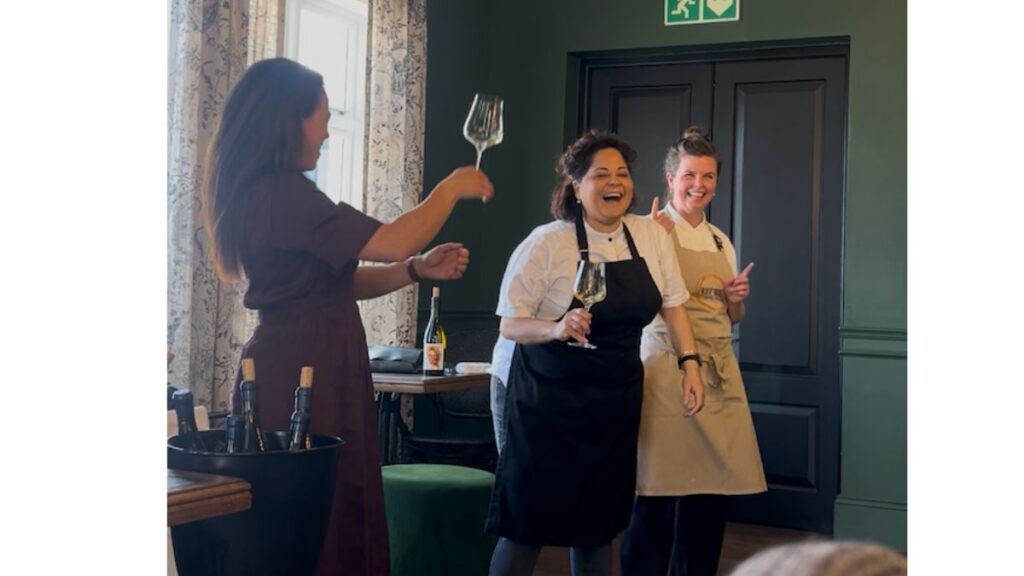
Welma raising a glass to chefs Amori and Julia at Upper Union on Sunday.