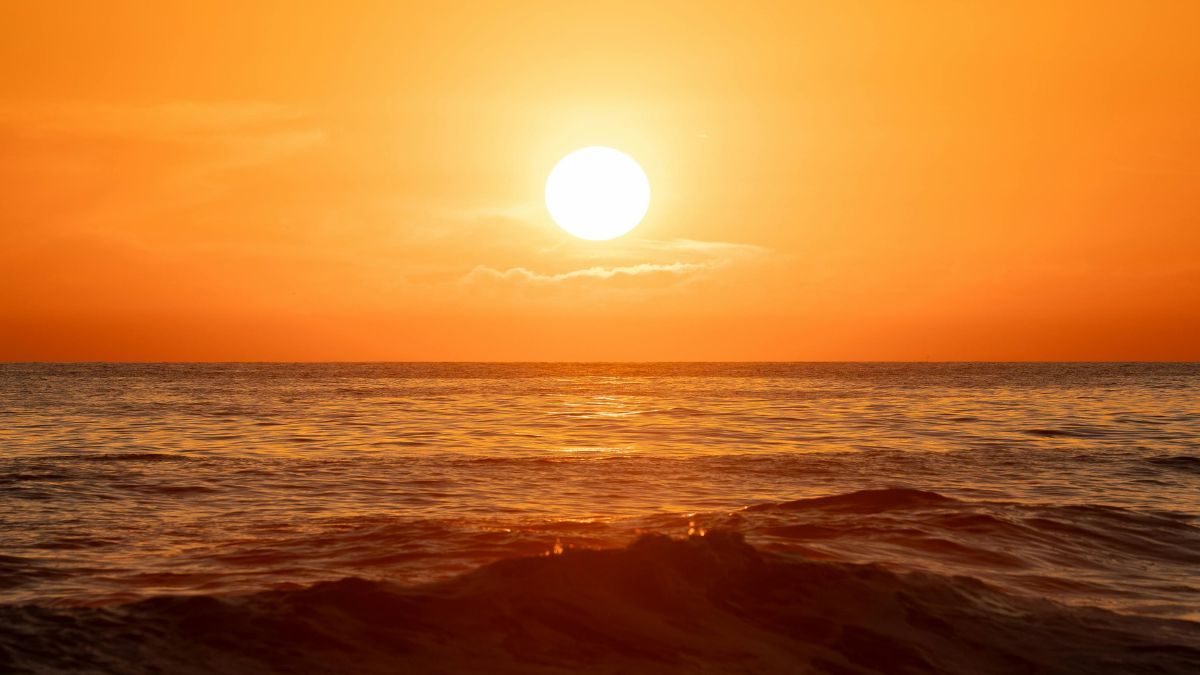
South Africa may face a warmer and drier summer than normal in 2026 as one of the strongest El Niño events in decades develops over the Pacific Ocean.
The South African Weather Service (SAWS) warned in its latest Seasonal Climate Watch, issued on 31 August, that the current event could strengthen further and possibly become the strongest on record. The weather service already warned earlier this year that a very strong El Niño could affect the country's summer.
What El Niño means for South Africa in 2026/27
A strong El Niño is defined as an event where three-monthly average sea surface temperatures over the east-central tropical Pacific Ocean rise 1.5 °C above climatology. During a very strong event, that part of the ocean is two °C warmer than normal.
According to the weather service, the latest forecasts suggest the current event will very likely exceed the three °C threshold. Weekly average temperature deviations over that part of the Pacific Ocean are already above the threshold that defines a very strong El Niño.
The US Climate Prediction Centre currently maintains an El Niño advisory and gives a greater than 90% chance that a very strong event will occur in the northern hemisphere's autumn and winter of 2026/27. This coincides with South Africa's summer months.
Less rain, higher temperatures
The SAWS's seasonal outlook for October to December 2026 indicates that below-average rainfall is the most likely outcome over most of the country. Above-average temperatures are also expected across almost all of South Africa.
The outlook for November 2026 to January 2027 looks very similar, with drier and warmer conditions over most of the country as the most likely outcome.
The weather service warns that the combination of an exceptionally strong El Niño and continued global warming could have particularly severe consequences.
"If the 2026/27 El Niño event brings the expected below-average rainfall to southern Africa, it is likely that a high frequency of heatwaves will occur simultaneously," the SAWS said. "These heatwaves could be severe."
The weather service also said the expected very strong event will, together with global warming, likely make 2027 the warmest year ever recorded.
Agriculture and water resources under pressure
El Niño develops when surface water in parts of the tropical Pacific Ocean becomes warmer than normal. It disrupts weather patterns worldwide and in South Africa is often associated with warmer and drier conditions over the summer rainfall areas. The system has already affected the country's weather over recent months.
The summer grain season begins in October, and crops and livestock in Gauteng, Limpopo, Mpumalanga, North West, the Free State and the Northern Cape are heavily dependent on good summer rainfall.
The 2025/26 season delivered above-average rainfall that restored dam levels and soil moisture across most summer rainfall areas. However, the recent winter months were drier than normal, and the onset of traditional summer rains is expected to be suppressed.
Cape Town and the Western Cape
The Western Cape differs from most of the country because it is primarily a winter rainfall area. El Niño's influence on Cape winter rainfall is moreover weak, since the system affects South Africa mainly during the summer months.
Cape Town's dam levels stood at approximately 76% by early September, lower than the same time last year, following a drier winter that followed exceptional May rains.
Summers in the Western Cape are normally already dry. Warm, dry and windy conditions, however, increase the wildfire risk in the region.
Not every El Niño is a drought
Although a strong El Niño increases the chance of a warm and dry summer, it does not mean drought is guaranteed.
"Although below-average rainfall is statistically the most likely outcome in southern Africa this summer, not every single El Niño event is associated with drought," the weather service said.
The events of 1982/83 and 2015/16 brought widespread drought to southern Africa. The very strong event of 1997/98, by contrast, delivered slightly above-average rainfall over parts of South Africa's summer rainfall region.
The Department of Agriculture will issue monthly advice together with provincial authorities, and producers are advised to closely monitor the weather service's early warnings.
The 2026/27 summer will be closely monitored, particularly regarding water availability, agricultural production and wildfire risk.
This article is an automatic English translation of a Nuusflits article originally published in Afrikaans. Read the Afrikaans original.