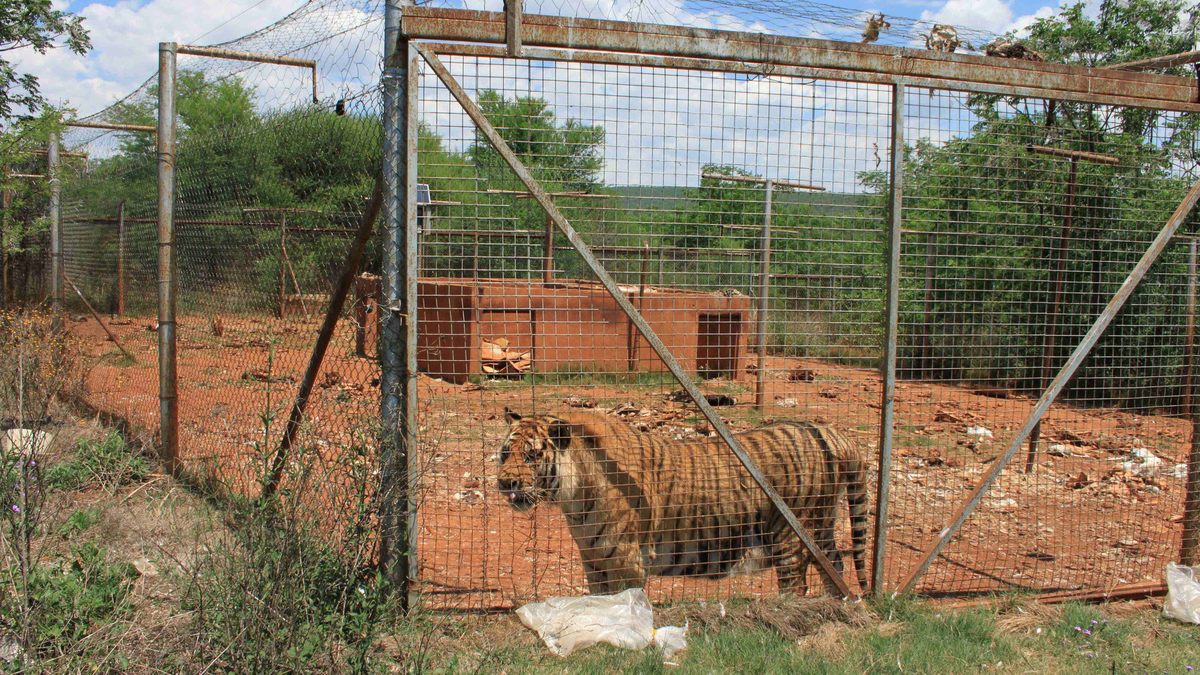
The National Council of Societies for the Prevention of Cruelty to Animals (NSPCA) has removed three Bengal tigers and a serval from a predator breeding facility in North West after inspectors found appalling conditions at the site.
According to the NSPCA, two of the tigers were being held in an enclosure full of faeces and decomposing carcass remains. The third tiger was severely lame and the serval had a large, untreated wound on its right hind leg.
The organisation's wildlife protection unit inspected the premises on Wednesday, 14 October. The animals were removed the following day under a warrant, with the assistance of a wildlife veterinarian and the Groot Marico police.
They were taken to a safe facility where they will receive further veterinary examinations and treatment.
Conditions at predator breeding facility in North West
According to the NSPCA, there were large quantities of fresh and old faeces, bones, feathers and decomposing chicken carcasses in the enclosure of two of the tigers. The enclosure had no separate holding area where the animals could be safely isolated during cleaning. Adequate shelter, environmental enrichment and sufficient clean drinking water were also lacking.
Inspectors received no evidence of veterinary treatment for the injured tiger.
The facility houses indigenous and exotic animals. According to the organisation, enclosures across the premises are too small for the number of animals being held in them. There is also no working refrigeration for meat, and the animals are fed carcasses of cattle and chickens that have died.
Several lions and a leopard are, according to the NSPCA, obese. Lions and animals in adjacent enclosures also fight through the fences, which causes stress and a risk of injury.
Previous inspections and permit conditions
During a previous inspection, inspectors found decomposing lion remains and crocodile remains on the property. This was reported to North West's department of economic development, environment, conservation and tourism, which issued the facility's permit.
According to the NSPCA, the owner confirmed during a joint inspection in June that the electric fences around the predator enclosures have not been working since 2021. A departmental official noted that this breached permit conditions.
Chief Inspector Douglas Wolhuter, manager of the NSPCA's wildlife protection unit, says no animal should be kept in such conditions. According to him, the case demonstrates why the organisation opposes the predator industry.
The NSPCA is also calling on the department of forestry, fisheries and the environment to extend its action against problems in the lion industry to include other exotic predators.
Second case against the facility
A case over alleged breaches of the Animal Protection Act has been opened. The NSPCA is compiling evidence for the file.
This is the second case against the facility. According to the organisation, the first file has been waiting since 2021 for a decision by the prosecution authority.
READ ALSO: NSPCA to lay criminal charges against SAPS following police dog Sky's death
READ ALSO: No prosecution in Al Kuwait ship death case
More information about the organisation's work is available on the NSPCA website here.
This article is an automatic English translation of a Nuusflits article originally published in Afrikaans. Read the Afrikaans original.