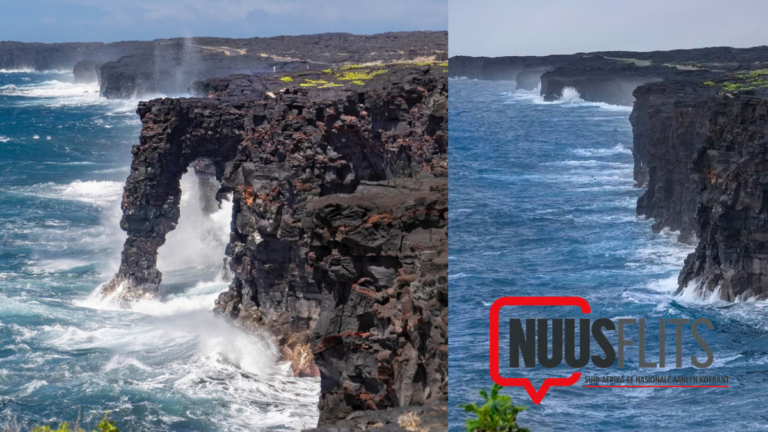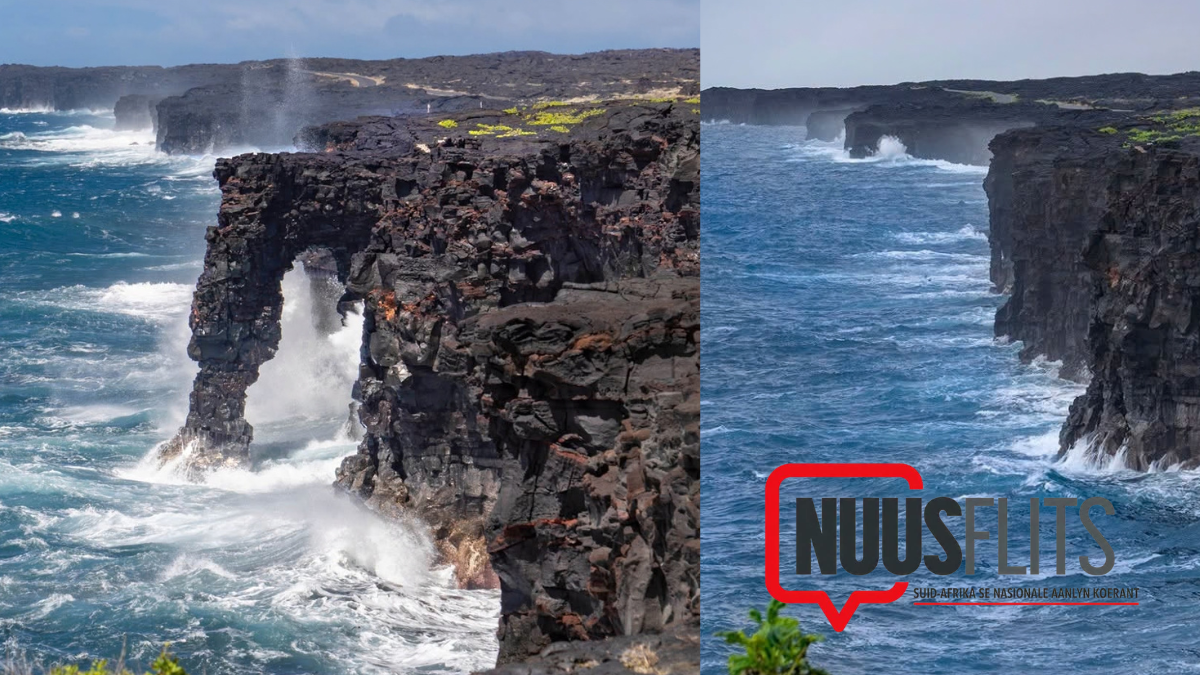
HAWAII. – A well-known natural landmark on Hawaii has vanished after approximately 550 years when the Hōlei sea arch on the south-east coast of Hawaiʻi Island collapsed into the Pacific Ocean.
The approximately 27-metre-high rock arch was part of Hawaiʻi Volcanoes National Park and was one of the famous geological formations along the island's rugged coastline.
According to the United States National Park Service (NPS), the Hōlei sea arch was still standing on Wednesday 23 September 2026. By Sunday evening 27 September it was gone. The exact time of the collapse is unknown.
The national park was temporarily closed during that period due to tropical storm Nolo. The NPS says the collapse could have occurred while the park was closed, but did not confirm that the storm was the direct cause.
The arch had been unstable for years
The Hōlei sea arch was not a permanent geological structure. According to the NPS, it was formed from an ancient lava flow from approximately 550 years ago. Different layers of the lava weathered at different rates, a process known as differential erosion.
The sea gradually carved away the softer parts of the rock over hundreds of years. This eventually formed a natural arch. However, the waves continued to attack the rock.
The NPS describes such sea arches as temporary formations. When the remaining rock bridge eventually gives way, it usually leaves behind a rock stack that is then further broken down by erosion.
The coast around Hōlei was already unstable before the final collapse. Earthquakes during the 2018 Kīlauea eruption and the accompanying collapse of the volcano's summit damaged the cliffs. New cracks and further instability led to the original viewpoint being closed in 2020.
Later in 2020, large waves during tropical storm Darby also broke off a section of the lower part of the arch.
A landmark destined to disappear
The NPS had already warned visitors that the Hōlei sea arch had a limited lifespan and would eventually collapse into the sea.
The collapse does not mean, however, that the geological development of the coastline has come to an end. According to the NPS, erosion will continue to form new caves, arches and other rock formations along Hawaii's coast.
The area remains dangerous in the meantime. The NPS warns that the cliffs near the former arch are unstable and could collapse without warning. Visitors are asked to avoid closed areas and the edges of the cliffs.
The disappearance of the Hōlei sea arch is thus also an example of how the Earth's landscape is constantly changing.
Source: National Park Service, Hawaiʻi Public Radio
This article is an automatic English translation of a Nuusflits article originally published in Afrikaans. Read the Afrikaans original.