WES-KAAP. – Wat ’n gewone naweek met werk by ‘n troue vir Tyron Kuypers van Somerset-Wes moes wees, het in ’n lewensgevaarlike oorlewingstryd geëindig toe honderde bye hom op ‘n Sondagoggend by die Tankwa Tented Camp aangeval het. Meer as 500 angels is uit sy liggaam verwyder.
Kuypers vertel in ‘n sosialemediaplasing hy het Vrydag 18 September by die kamp aangekom en saam met DJ Ash Brook by ‘n troue gewerk. Hy vertel hoe hy die oggend ná die troue vroeg in ’n skeepsvraghouer ingestap het sonder om enige bye raak te sien. Ná hy gestort het, het hy van ‘n geluid bewus geword – dit was die gegons van tussen 50 en 100 bye by hom in die stort. Toe hy die deur oopmaak, was daar ’n groot swerm buite.
Hy het kalm gebly en het stadig deur die bye geloop, maar is binne enkele oomblikke oor sy hele liggaam met bye bedek. Die bye het volgens hom in sy ore, neus, mond en onder sy handdoek ingekruip. Hy het sowat tien meter gevorder voordat hy terug na die stort is. Daar het hy die bye met water probeer afwas en met sy hande uit sy mond en ore verwyder. Toe hy in die spieël kyk en sy gesig en kop vol steekmerke sien, het hy besef hoe ernstig die situasie was.
Kuypers sê hy het die opening waardeur die bye binnegekom het so goed as moontlik toegemaak en daarna die bye met sy nat handdoek begin slaan. Hy het ook op die metaaldeur geslaan en om hulp geskree. Hy het daarna deur die kamp gehardloop tot by ’n oop voertuig waar hy ingeklim het om van die bye weg te kom.
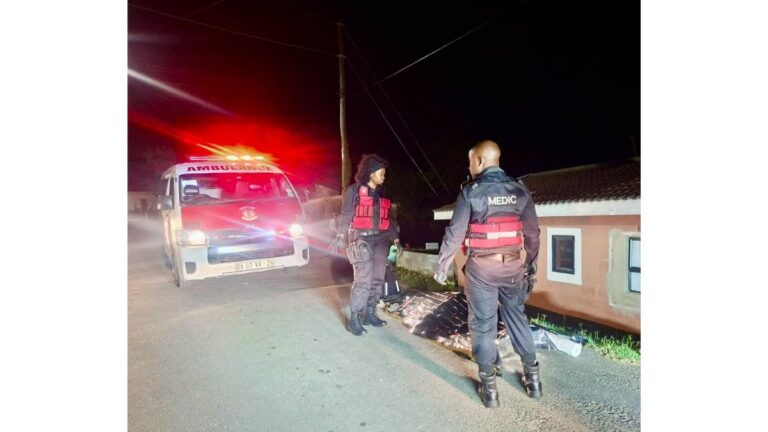
‘n Werker van die kamp het hom later na die ontvangsarea geneem, waar vier of vyf dokters wat onder die trougaste was, hom behandel het. Hy was naar, duiselig, het gesukkel om asem te haal, het herhaaldelik opgegooi en dit het gevoel of sy liggaam aan die brand was. Die dokters het angels verwyder en medikasie toegedien voordat een van hulle, George, hom Ceres toe geneem het.
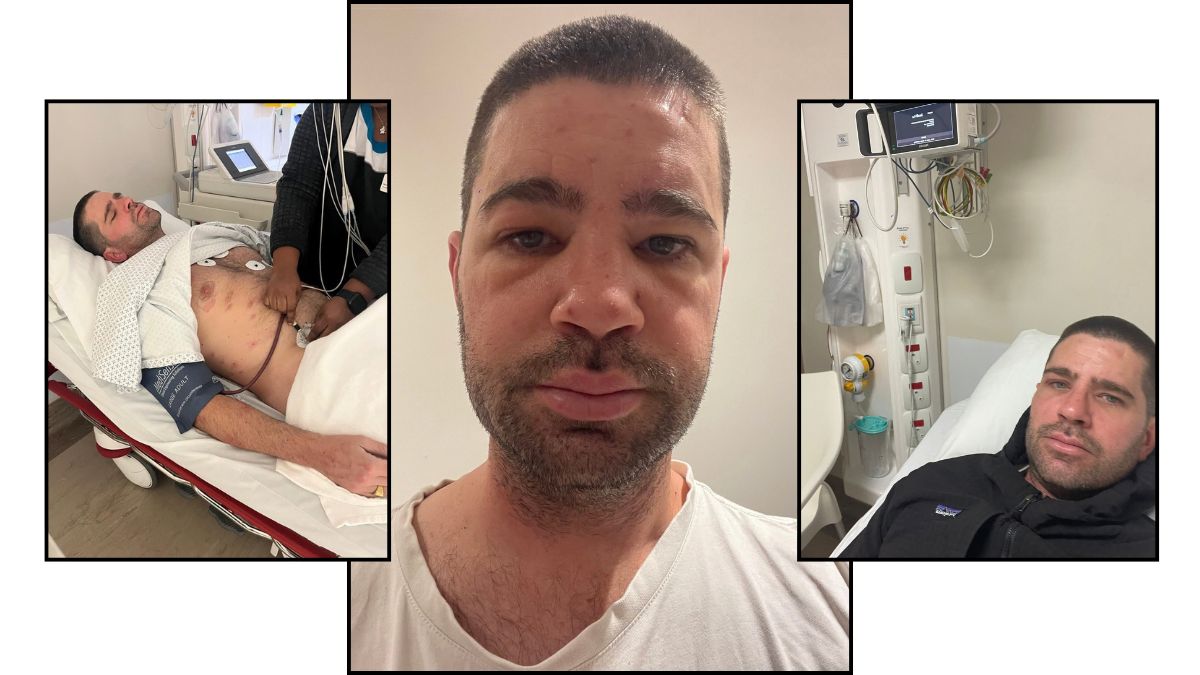
Daar het Kuypers se vrou en broer oorgeneem en met hom na Mediclinic Stellenbosch gejaag, waar hy oornag in die hospitaal gebly het. Tussen 400 en 500 angels is uit sy liggaam verwyder.
Kuypers is die volgende oggend ontslaan en herstel tans tuis, hoewel sy gesig steeds geswel is en hy baie moeg is. Hy sê ander mense het hom intussen vertel dat hulle ook deur die bye aangeval is, terwyl hy self ’n kampwerker in ’n volledige byeboerpak met iets wat soos ’n roker gelyk het, gesien het. Hy sê hy weet steeds nie wat die volledige omstandighede van die gebeurtenis was of wat vooraf van die swerm bekend was nie, maar glo die vrae daaroor moet behoorlik beantwoord word. “Maar ek het oorleef,” sê hy. “Iemand anders sou dalk nie.”
Nuusflits het Tankwa Tented Camp vir kommentaar gevra.
Lees Tyron se volledige plasing hier onder in Engels:
On Friday, 18 September 2026, I travelled to the Tankwa Tented Camp to work at a wedding alongside a wedding DJ called Ash Brook. We arrived at around 5pm on Friday and spent the evening setting up the sound system, finishing at approximately 1am on Saturday morning. We continued fine-tuning the setup the following day before the wedding began. It was a beautiful wedding. Everyone had a great time. Over the course of the day I got to know many of the guests, the family, and of course the bride and groom. I took photographs, DJed and helped create what was, up until that point, a really memorable occasion. We eventually went to bed at around 3am.
The following morning, Sunday, I woke up before my colleagues. We still had a substantial amount of equipment to pack down, and I was determined to get us on the road by around 2pm. The Tankwa is remote. From the venue there is roughly 115km of dirt road before reaching Ceres, and from there I still had to travel home to Somerset West. I wanted to let the rest of the team sleep for a bit longer, so I packed up my tent and decided to shower and get myself ready for the day. The showers at the camp are built into shipping containers. The venue is extremely rustic and handmade. Things are weathered and fairly basic, but none of that had pppbothered me. I took my toiletry bag and a towel and walked from my dome tent to the shower. It was already hot, so I had a cold shower. There was nothing unusual when I went inside. I don’t remember seeing or hearing a single bee.
When I finished showering and turned off the water, however, I heard buzzing. I turned around. There were suddenly somewhere between 50 and 100 bees inside the shower with me. They appeared to be entering through a small open window above the door. I was naked, enclosed in a shipping-container bathroom and immediately realised that I needed to get out. I opened the door. Outside was an enormous swarm of bees. As soon as the door opened they began coming into the shower quickly and aggressively. I made a decision in that moment to stay calm. I thought that if I didn’t panic and slowly walked through them, I could get away from the swarm. So that is what I did. I stepped outside and began slowly walking through the bees. Almost immediately, they started landing on me. They covered my legs and torso. They began landing on my head and face. They flew beneath the towel wrapped around my waist and towards my groin. They went into my ears. They went up my nose. They began forcing their way into my mouth. I managed to walk perhaps ten metres before I couldn’t continue. By then I was covered in bees. My eyes were closed. My fists were clenched. I was concentrating on my breathing and desperately trying to remain calm. Strangely, at that stage I wasn’t even fully conscious of being stung. There was so much happening at once that my entire focus was on one question: How do I survive this? I remember thinking, “Lord, what do I do?”
The only rational solution I could come up with was to somehow get back to the shower and use the water to wash them off me. By this point, I estimate around ten minutes had passed since I had first noticed the bees. I turned around and somehow made my way back. My eyes were still closed and bees were continuing to land all over me. I found the shower, got inside and turned the water on. I began trying to wash them from my body. I used my hands to pull bees from my mouth and from my ears. But they didn’t simply wash away. They clung to me. Eventually, little by little, enough of them came off that I could open my eyes. There was a small mirror in the bathroom. I looked into it. My face and head were covered in bee stings. That was the moment I understood how serious the situation was. Until then I had been completely focused on staying calm. But when I saw myself in that mirror, I genuinely thought that I might die.
Something changed in me. I realised that calmly waiting wasn’t going to get me out of there. The bees were still getting inside, so I tried to close the opening they were coming through and secured the door as best I could. My towel was now soaking wet. I grabbed it and started swinging it at the bees. I hit them against the walls. I stood on them. The shower drain began filling with dead bees. There were bees everywhere. There were still bees crawling on me, and I could now see the stingers embedded throughout my body as I tried to pull them out. They were in my chest, my arms, my armpits, my legs, my feet, my face and my head. I began pounding on the metal bathroom door and screaming. “Help me! Help me!”
Eventually somebody came. I heard a voice outside telling me to open the door. I opened it and ran. I ran through the campsite screaming for help. By then I was becoming extremely dizzy. My adrenaline was surging and I was terrified. In the distance I saw someone. They looked at me as if to ask what was wrong and I shouted that I needed help. Then I watched as that person also began swatting at their neck and face. The bees were attacking them too. They ran. I noticed that they had left the door of their vehicle open, so I climbed into what I remember being a Hilux bakkie and pulled the door closed behind me. For the first time, I was somewhere the bees couldn’t continue flying at me. I hit the hooter repeatedly, trying to attract someone’s attention. Inside the vehicle, I started pulling bees off myself and looking at my body in the mirrors. That was when the panic really began to set in.
After a short while, a vehicle from the Tankwa Tented Camp arrived. One of the men working at the venue was driving it and shouted for me to get in. I remember telling him to wind up his windows because the bees were still around us. I climbed into the vehicle and he drove me towards the main reception area where the wedding guests were having breakfast. On the way there, I saw something which has stayed with me. One of the workers at the venue was dressed in a full beekeeper’s suit and was carrying what appeared to be a bee smoker. He seemed to be walking in the direction of the bees. At the time, I didn’t know what to make of it.
We reached the reception area. I climbed out of the vehicle. By this point I was either completely naked or had very little covering me. I honestly can’t clearly remember whether I still had the towel. I was too far gone to care. I was shaking uncontrollably. I was shouting and crying. My body felt as if it was on fire. The joints behind my knees and elbows burned. My face and lips burned. I was nauseous, dizzy and struggling to breathe. At the same time, I was completely conscious of the fact that I was standing essentially naked in front of a group of wedding guests who had, minutes earlier, simply been enjoying breakfast after a beautiful wedding. It must have been traumatic for everyone who witnessed it.
By extraordinary luck, there were four or five doctors among the wedding guests. They immediately began helping me. They worked around my body removing stingers. They administered medication. From what I remember there were antihistamines and medication to control the reaction and inflammation. They tried to slow my breathing down. “In through your nose. Out through your mouth.” But breathing was difficult. I couldn’t keep still. I was squirming and shaking, and the pain came in waves. I was vomiting repeatedly. I remember being turned from side to side so that different people could continue removing stingers from different parts of my body. One of the doctors told me he had stopped counting after around 150 stings. Another mentioned a figure of around 200. Everything from this period is understandably blurred.
At some point I asked one of the women helping me to phone my wife. She tried, but couldn’t reach her. She then phoned my mother. I could hear her talking to my mom while people continued working on me. And then something happened which I find very difficult to explain. In amongst the pain and fear, I suddenly felt an overwhelming sense of peace. I started crying. I told the people around me: “I can feel the prayer.” I knew my family would be praying for me. Whether somebody else understands that feeling or not, it was completely real to me. For the first time since the attack began I felt centred. I felt loved. I felt that I wasn’t alone. After that, I felt better able to push the pain aside and concentrate on surviving what was happening to me.
Eventually one of the doctors, George, put me into his car. The nearest proper medical care was hours away. He began driving me towards Ceres, where we met my wife and my brother. From there, my wife and brother drove me to Mediclinic Stellenbosch. I was admitted through the emergency department and later into hospital, where I remained overnight. I was placed on drips and given various medications while the medical team continued treating and monitoring me. More stingers were removed. By the time everything was over, somewhere in the region of 400 to 500 bee stings had been removed from my body. I was discharged the following morning. I’m now recovering at home.
The pain has largely disappeared, although the swelling – particularly around my face… has continued and I’m extremely tired. But I survived. And that is the part of this story that I keep returning to. I survived. Someone else might not have. Since the incident, other people who were at the wedding have contacted me with information about what they saw that morning. Ben, who was the MC at the wedding, told me that while walking with his baby that morning he saw the bees and what he believed to be their hive. The wedding photographer contacted me and told me that she too had been attacked by bees. I was also told that another man showering near me that morning was attacked.
And, while I was being driven away after my attack, I personally saw a member of staff wearing full beekeeping protective clothing and carrying what appeared to be a smoker. I don’t yet know the complete circumstances surrounding the bees or exactly what was known before I stepped into that shower. Those are questions that still need answers. What I do know is what happened to me. I walked into a shower on a Sunday morning after working at somebody’s wedding. There were no bees that I noticed when I entered. Minutes later, I was naked, alone and covered from head to toe in hundreds of them, trying to pull insects out of my ears, nose and mouth while wondering whether I was going to survive. I know that other people were also attacked. And I know that if the person caught in that swarm had been a child, an elderly person, somebody severely allergic to bee venom, or simply somebody who had not managed to get themselves back into that shower, this story could have ended very differently. That is why I am telling it.
This isn’t about sensationalising what happened. It isn’t about diminishing what was otherwise a beautiful wedding or the extraordinary people who came to my aid. In fact, I will forever be grateful to the doctors, guests, workers, my family and everyone who helped get me from that bathroom in the Tankwa to a hospital bed in Stellenbosch. Some of those people may very well have saved my life. But something this serious cannot simply disappear into an unfortunate story about a wedding weekend. I believe the circumstances surrounding what happened need to be properly understood. I believe questions need to be asked. And, most importantly, I believe steps need to be taken to make sure that nobody else ever finds themselves standing where I did that morning, wondering whether they are going to make it out alive.