


Families often ask what to do when someone dies in South Africa and what the legal steps are. The estate process in South Africa is set out by law and involves documents, the appointment of an executor, and compulsory legal notices. Knowing these steps can help prevent delays and ensure the estate is wound up correctly.
Step 1: Register the death
The very first step is to register the death with Home Affairs. A death certificate is issued, and without this certificate the estate process cannot begin.
Step 2: Report the estate
Within 14 days, the estate must be reported to the Master of the High Court. The nominated executor or family members must submit:
- The death certificate
- Identity documents of the deceased and spouse
- A copy of the will (if one exists)
- A full list of assets and liabilities
This opens the official estate file and begins the administration process.
Step 3: Appointment of an executor
The Master of the High Court appoints an executor by issuing Letters of Executorship. This document gives the executor full legal authority to manage the estate, collect assets, pay debts, and distribute inheritances. If there is no valid will, the Master may appoint a professional executor.
Step 4: Publish the required legal notices
Two legal notices are compulsory in South Africa:
- Notice to Creditors (Form J193): This must be published in the Government Gazette and in a newspaper or online newspaper circulating in the district where the deceased lived. Creditors then have 30 days to submit claims.
- Liquidation and Distribution Account (Form J187): After debts are paid and the account is prepared, this notice is published to confirm that the account lies open for inspection for 21 days at the Master’s Office and the local Magistrate’s Court.
Failure to publish these notices correctly can result in the estate being delayed, rejected, or legally challenged.
Step 5: Settle debts and distribute inheritances
The executor gathers all assets, pays debts owed by the estate, and drafts the Liquidation and Distribution Account. Once the J187 inspection period is complete and no objections are lodged, the heirs may receive their inheritance.
How long does the estate process take?
The estate process in South Africa usually takes between 6 and 18 months, depending on:
- Whether a valid will exists
- The complexity of the estate and assets
- Disputes from creditors
- Final tax clearance from SARS
Why knowing what to do when someone dies matters
Understanding what to do when someone dies in South Africa gives families peace of mind. From registering the death to publishing the J193 and J187 notices, each step must be completed properly to ensure the estate is legally wound up.
Make publishing your estate notices simple
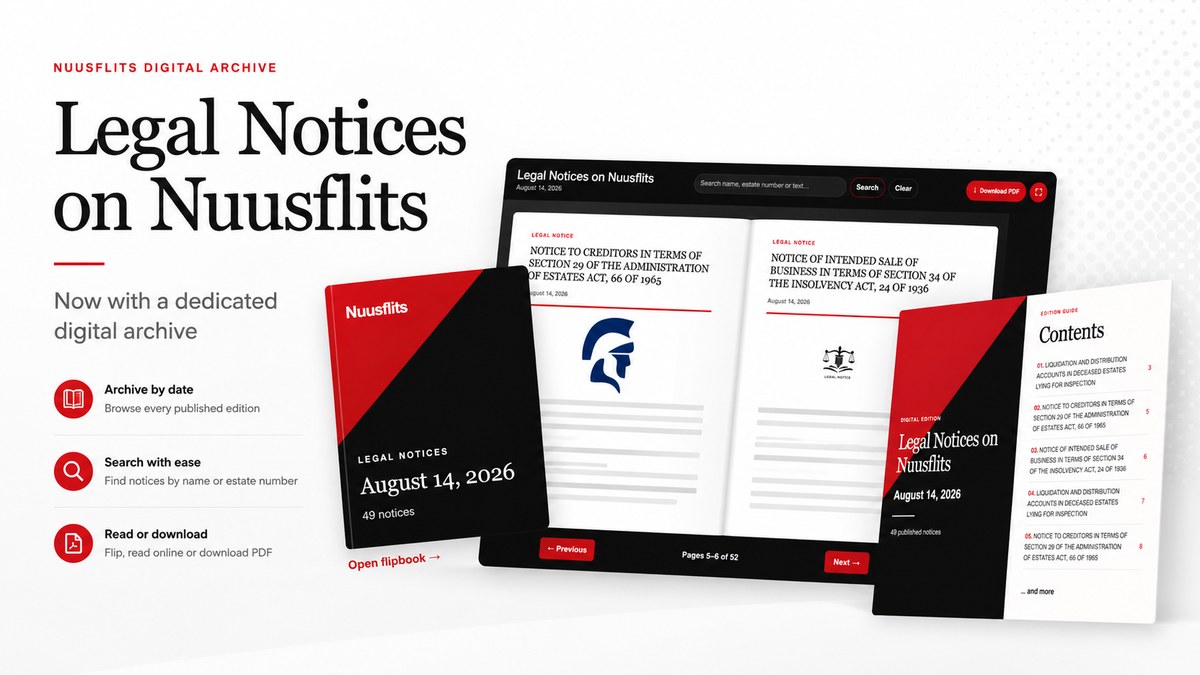
At LegalNotice.co.za we handle both J193 and J187 notices quickly and affordably. We manage the Nuusflits online newspaper placement and the Government Gazette submission — giving executors and families a 100% compliant, time-saving solution.
Contact us today: [email protected]